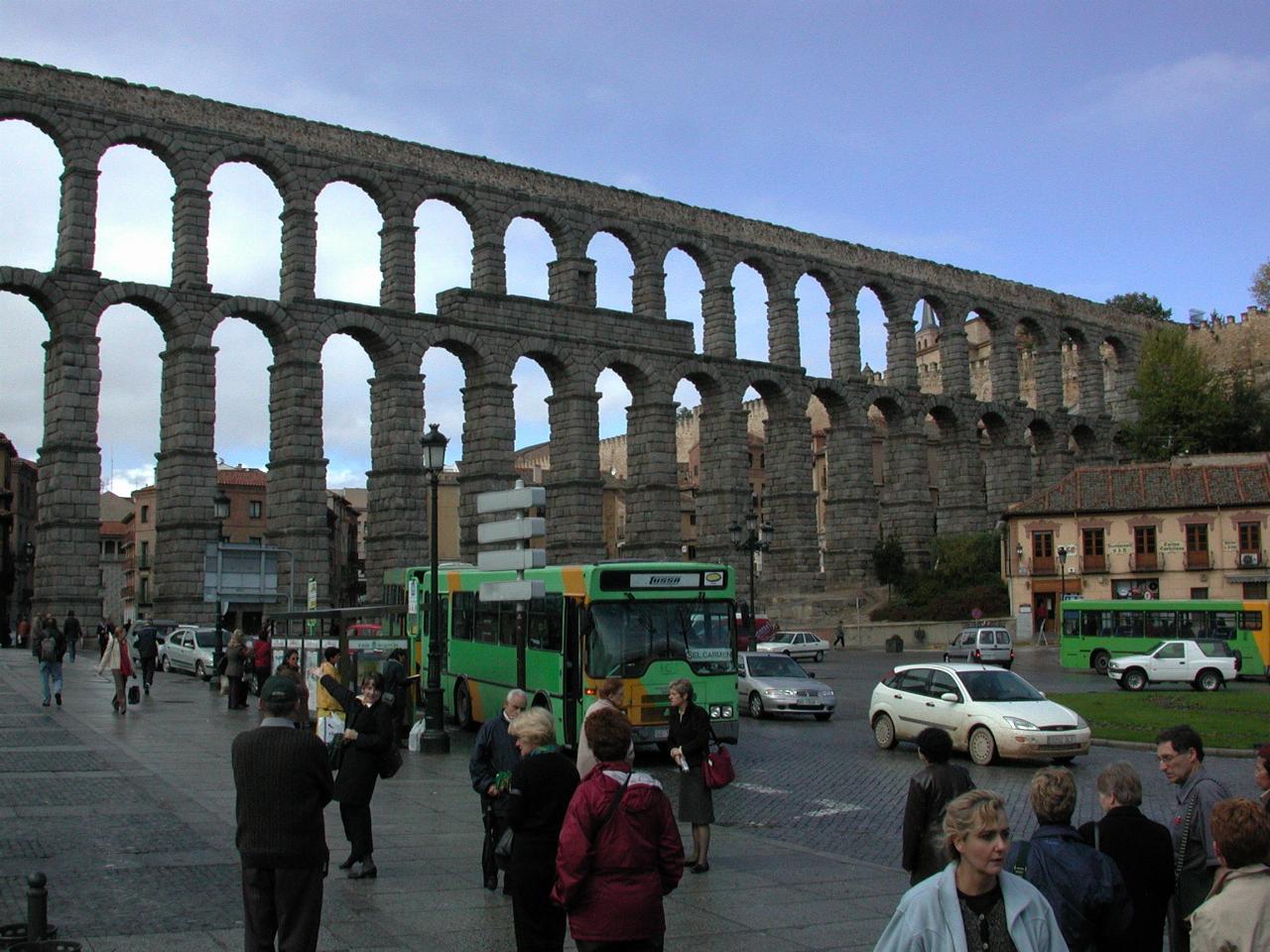
The Roman Aqueduct is one of the largest Roman constructions still standing in Spain. Built in the first century AD, it carried water to the city until the 20th century. It's 166 arches rise over 28m above the Plaza del Azoguejo. The huge granite blocks stay in place without mortar, which may have lead to the medieval legend that the devil himself built the aqueduct in one night. Recently the granite was found to be crumbling, and traffic was banned from passing under the arches.
Details:-
Modern life goes on in the shadow of a 1900 year old engineering marvel.
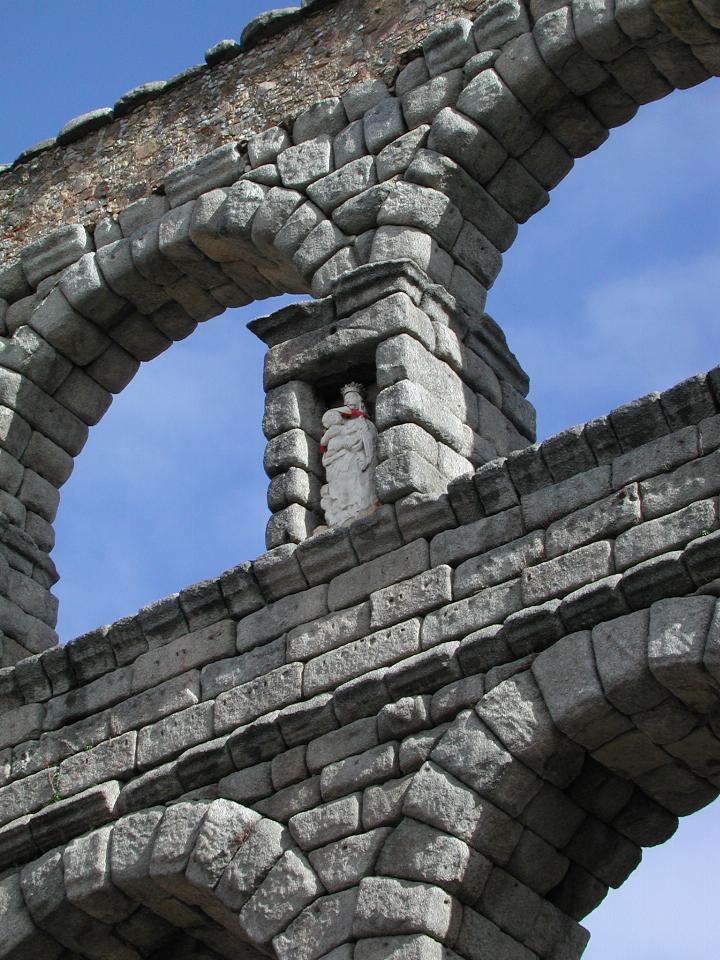
A statue in the upper section of the aqueduct. It appears to be the Virgin and child.
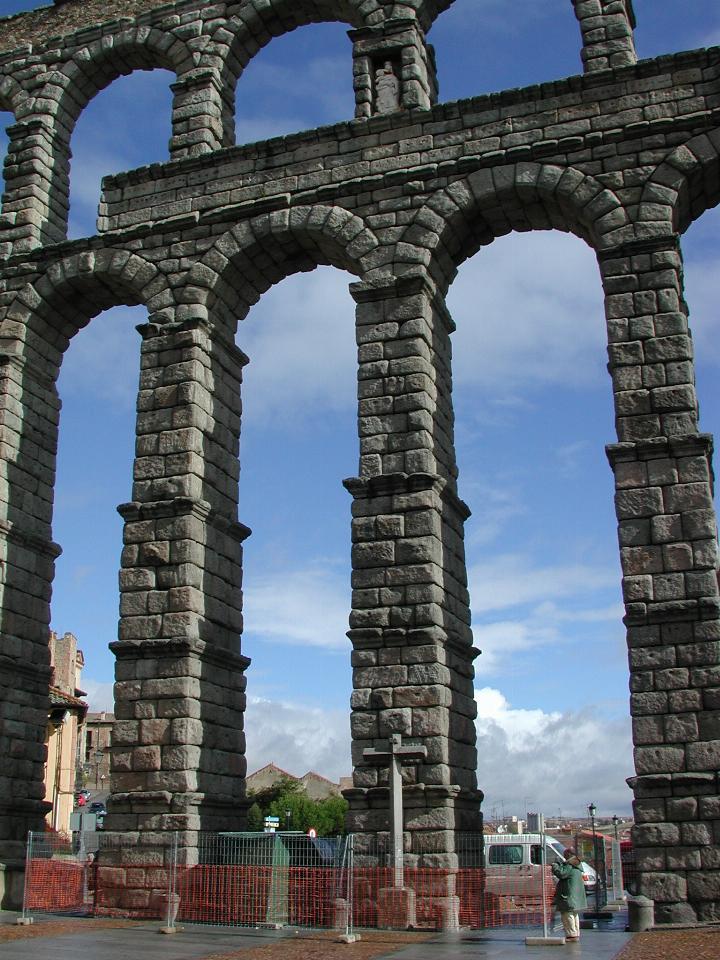
And there's also a cross directly below the statue.
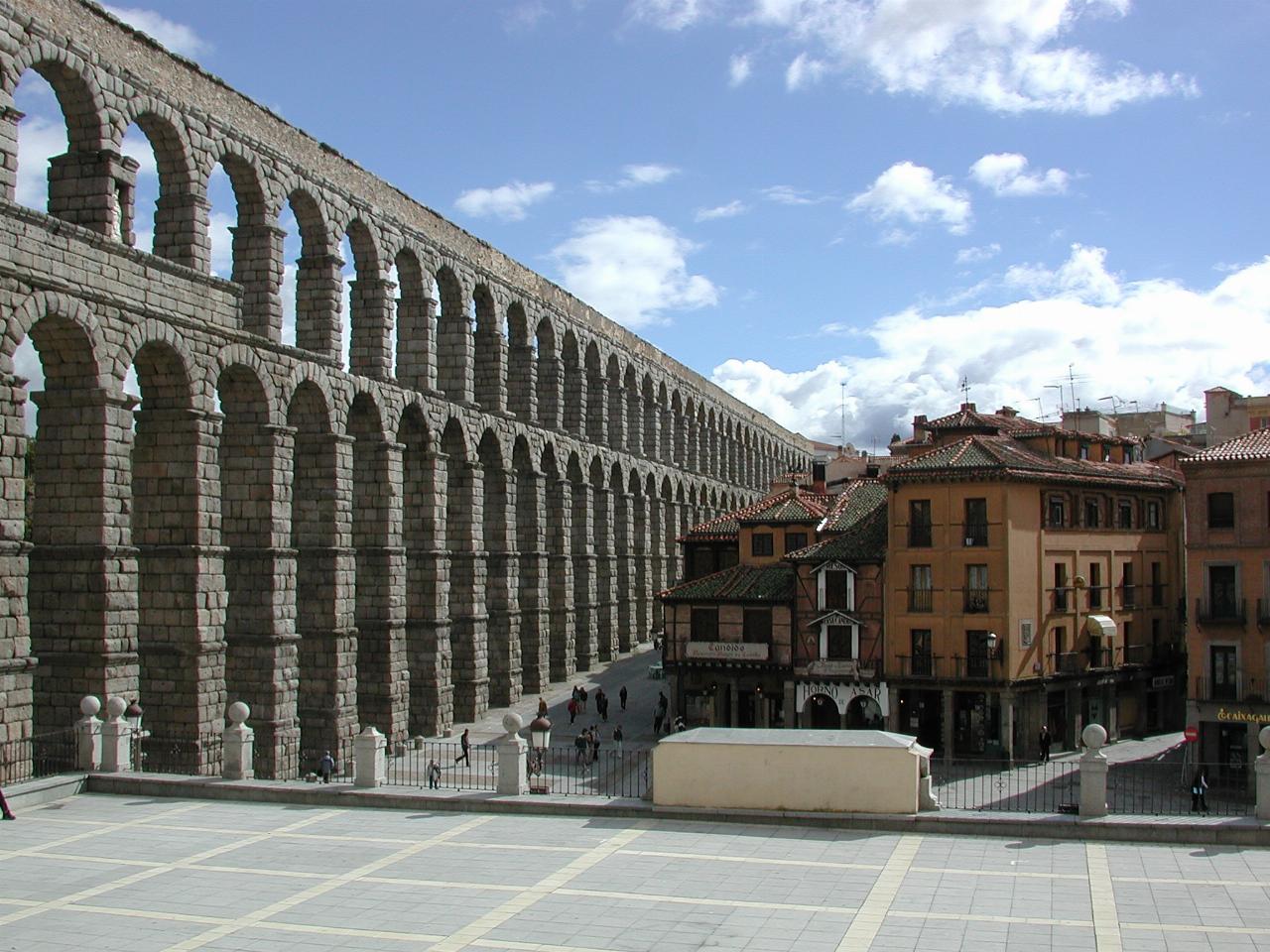
Looking along the aqueduct.
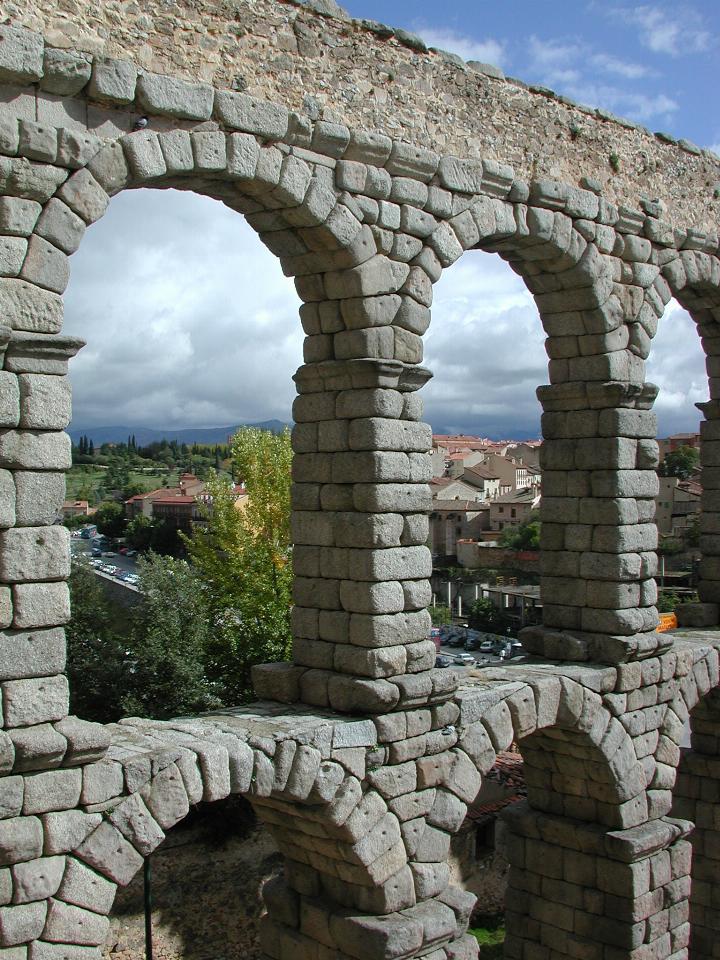
A more detailed view of the upper section near where it enters the old city walls.
 Segovia Mass