July 14th was the day that Peter and Yvonne's tour arrives in Rome. While I don't recall that there was a specific time, it was going to be late in the afternoon, as the tour group had another 2 days in Rome to explore, more or less on their own. And Peter and I were in touch via SMS several times during the day - we both had Australian phones, and voice calls are very expensive, while SMS is just tolerably expensive!
So I had a morning expedition, as shown on this map.
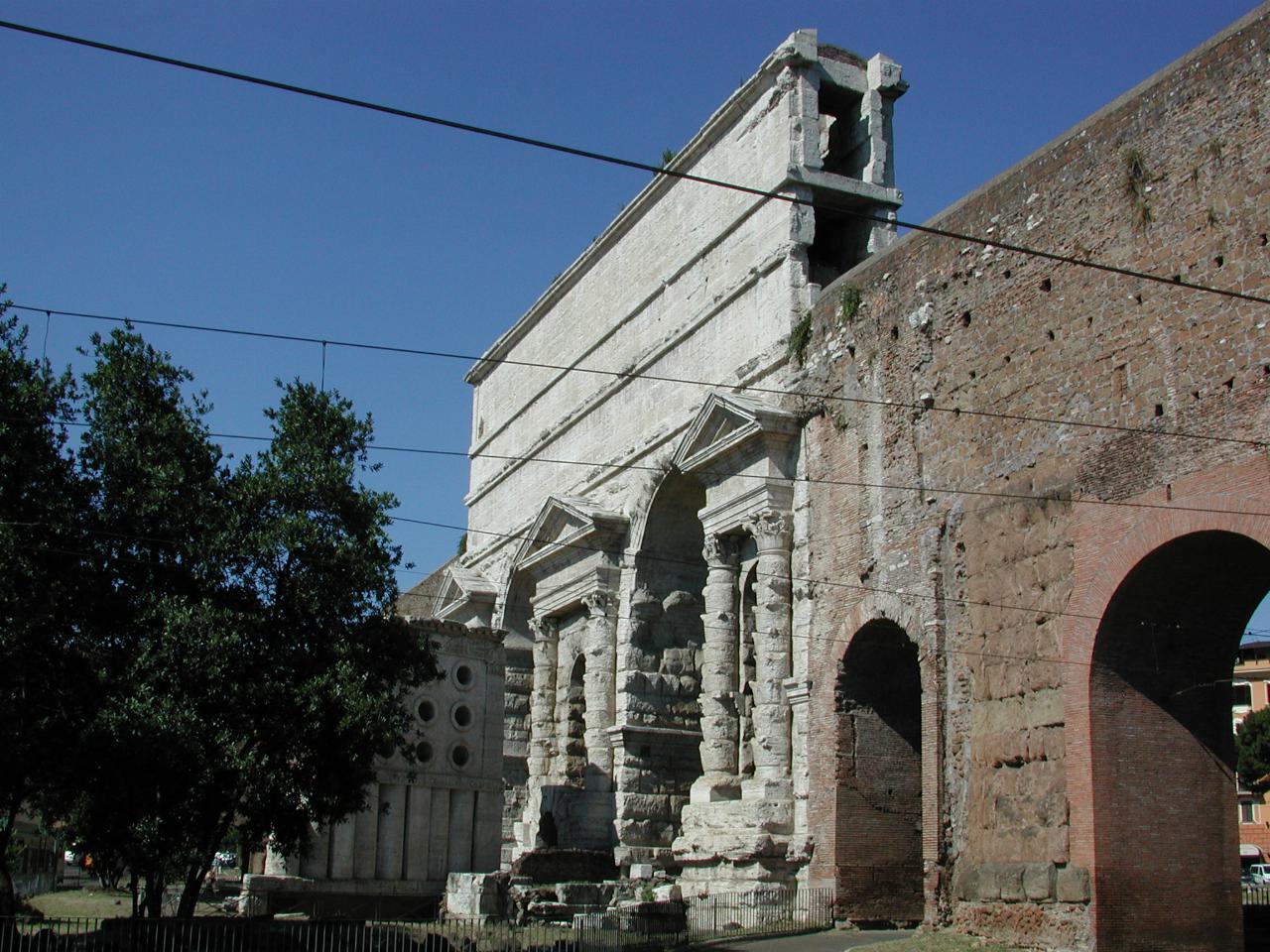
The gate in its modern context. The wires are for the trams which run through the wall in front of the gate. I think this was taken from outside the walls, so this (minus wires etc.) would be the view of approaching travellers. The map I had (and which is used in the map above) seemed to be incorrect in this area, showing some areas that were outside the walls as being inside. Took me a while to sort that mess out, or more precisely to assume the map was wrong, and that I should ignore it. But since it was a free map, it was worth what I paid for it.
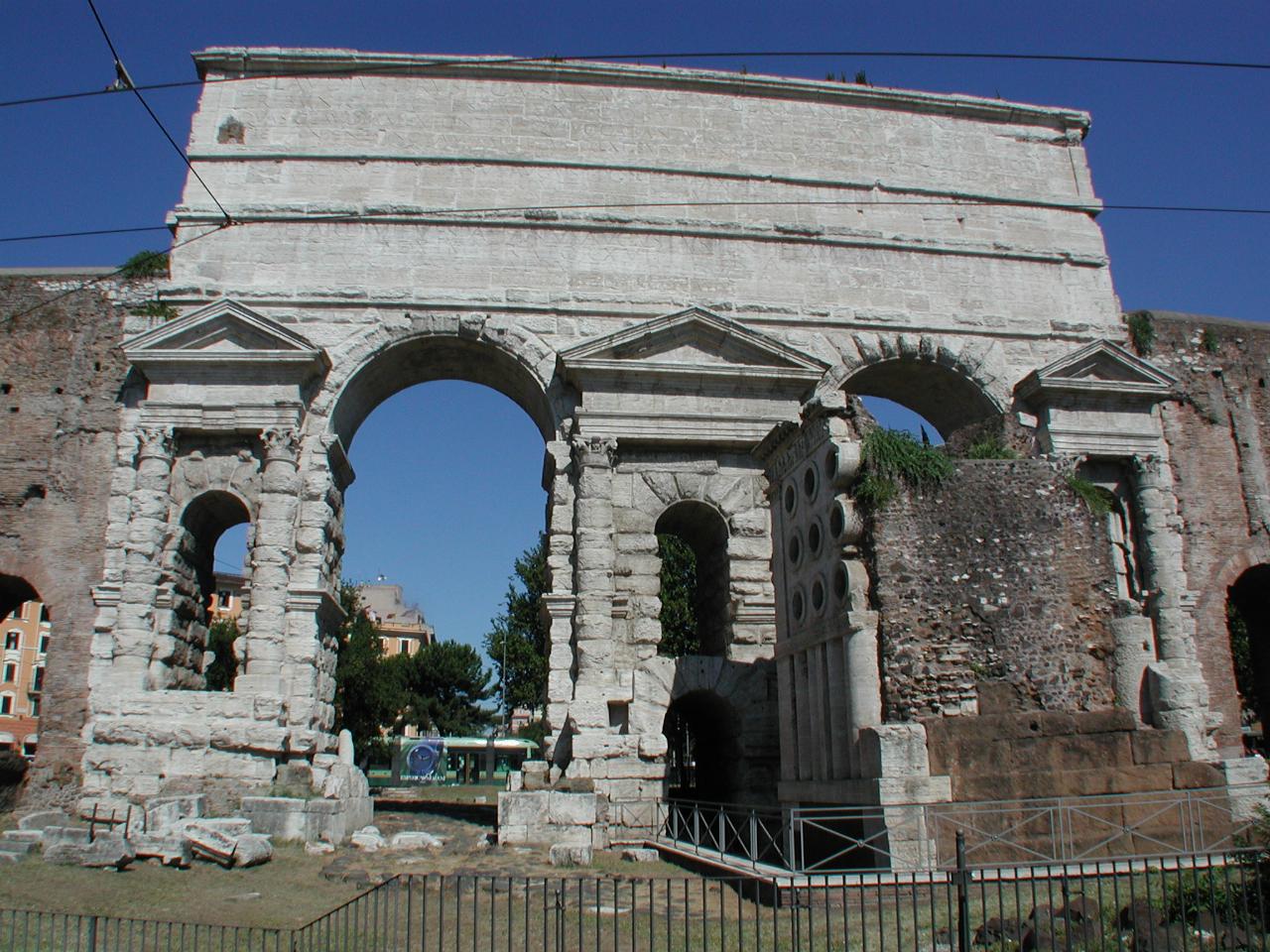
A face on view. Note that there is some distortion in this image. I had to use the wide angle lens to capture the gate with minimal amount of obstructions from modern life. This resulted in the gate looking as though it's leaning back. Some digital magic mostly fixed that, but the gate is suffering from pincushion distortion - the top and sides appear bowed out, even though they are not.
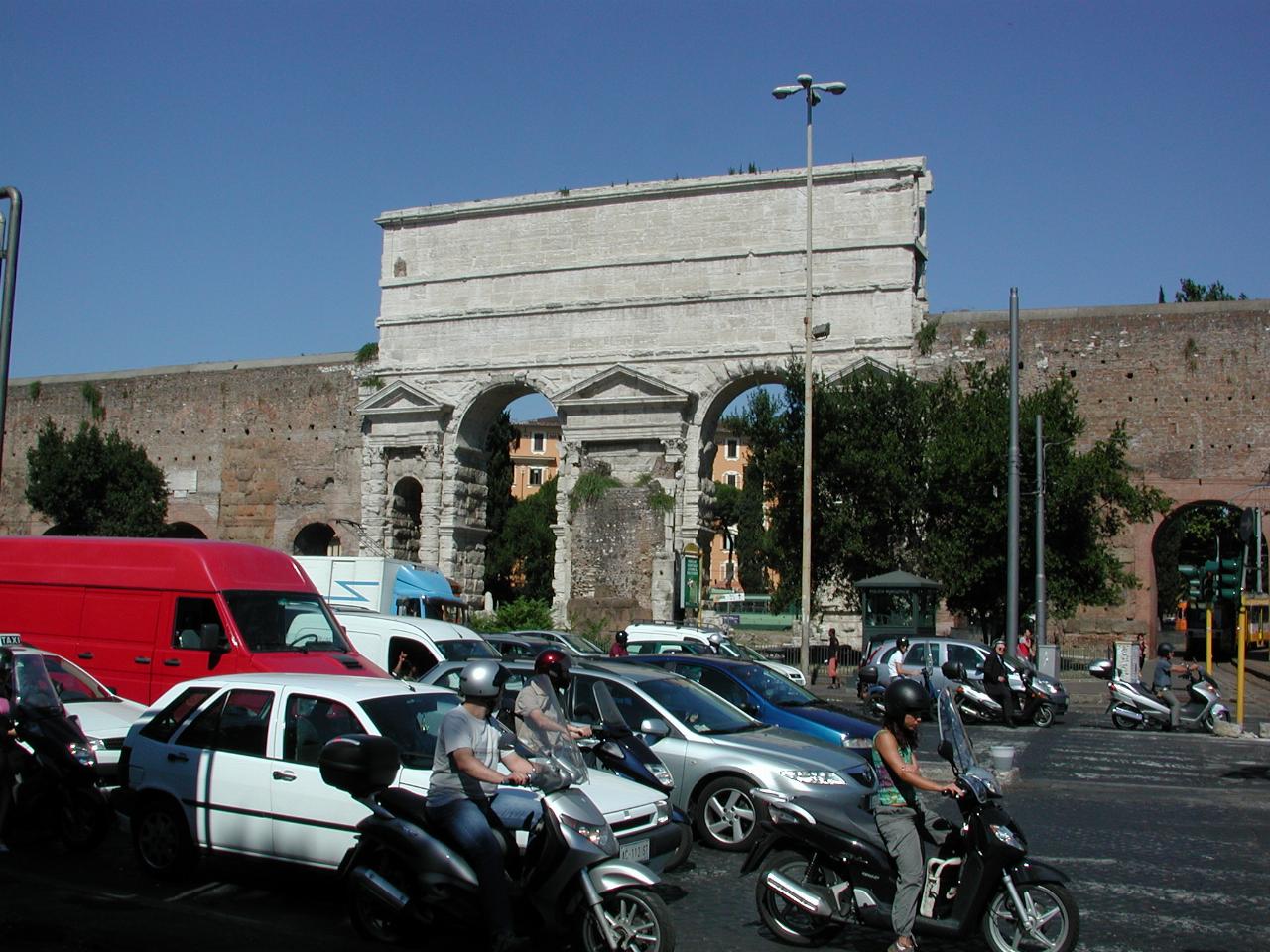
The Porta Maggiore in modern context!
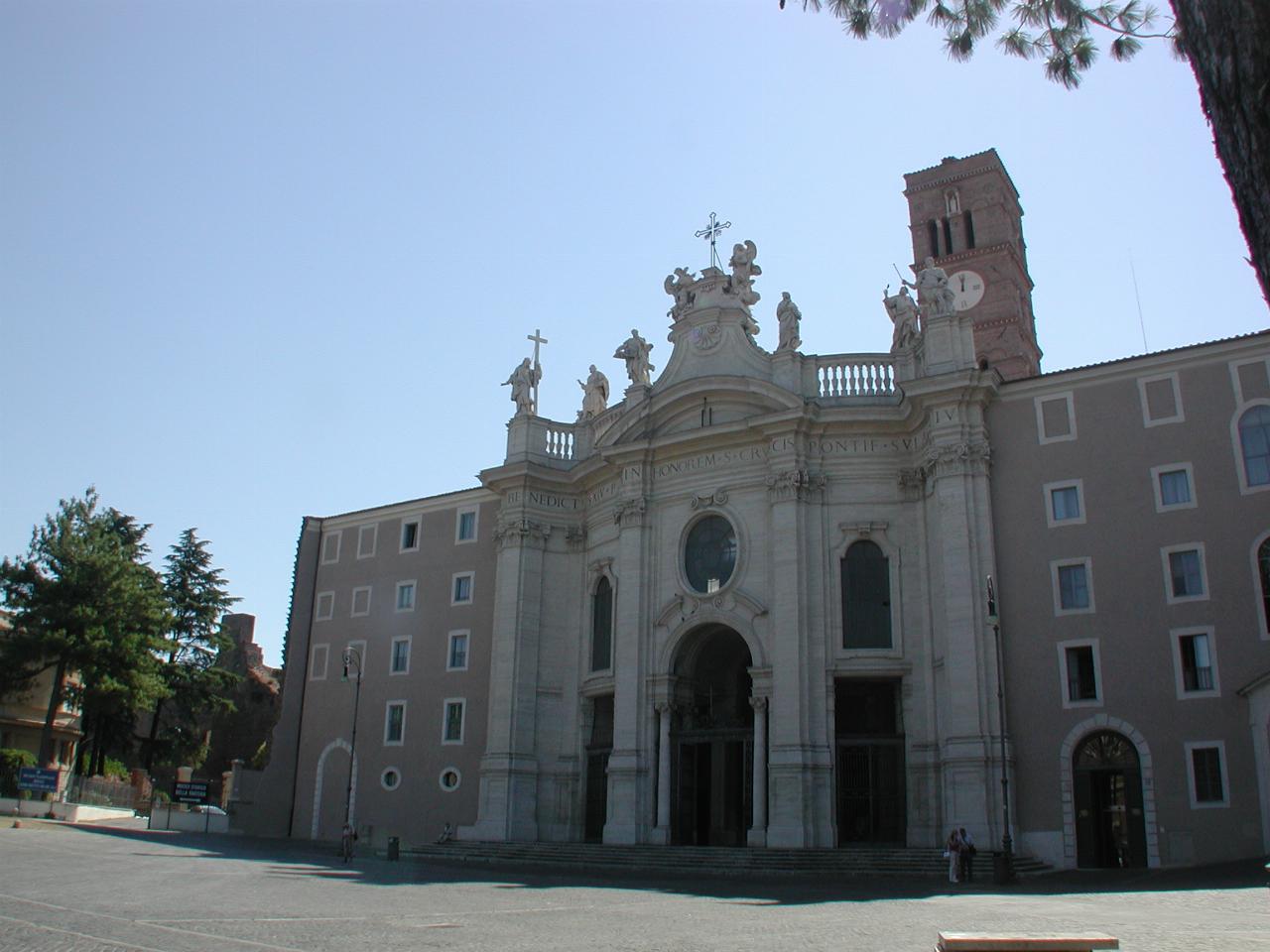
This facade was built in the 18th century at the behest of Pope Benedict XIV, who also oversaw the building of the road linking Santa Maria Maggiore, San Giovanni in Laterano and this church. The road was originally planned by Pope Sixtus V in the previous century!
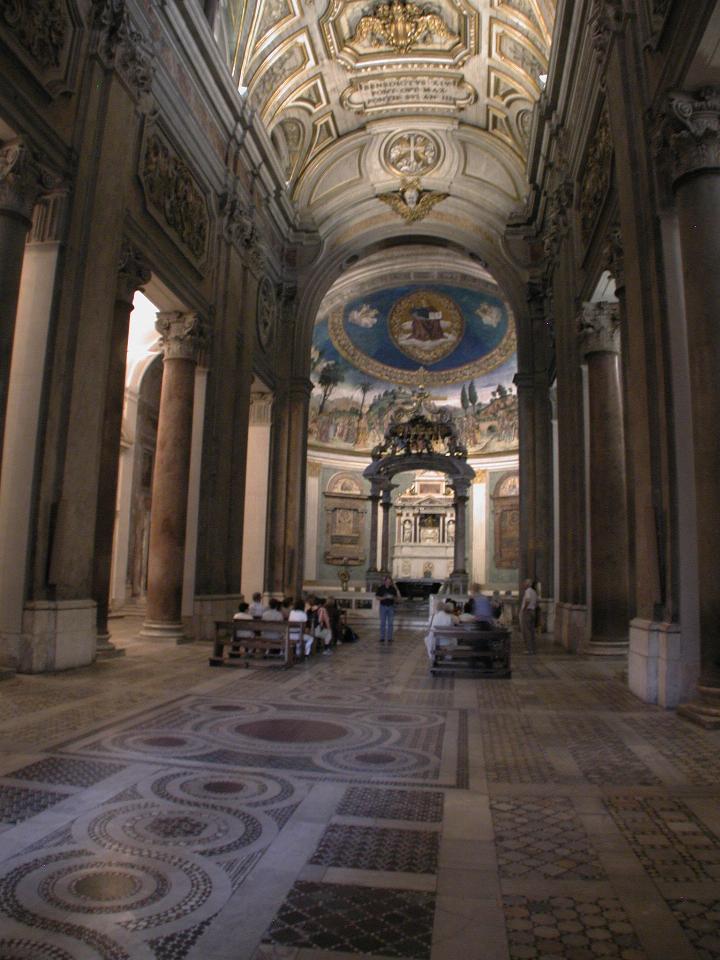
The interior of the church, looking towards the altar. The granite pillars are ancient, and the only parts of the ancient church still visible.
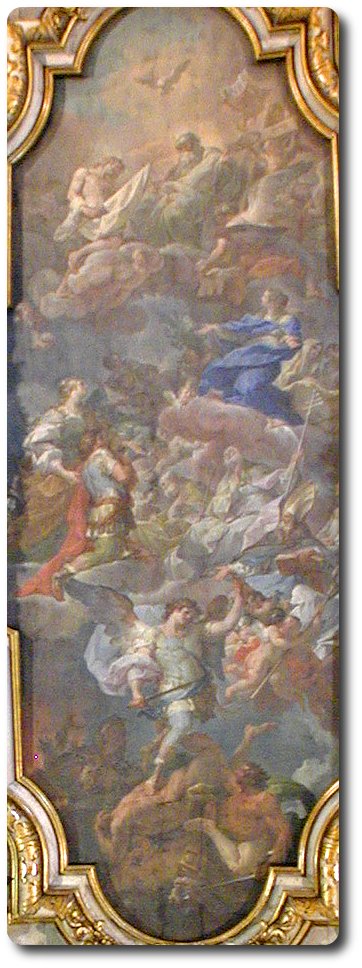
The ceiling, a wooden false vault, is the painting St. Helena Ascending into Heaven, painted by Corrado Giaquinto in 1744.
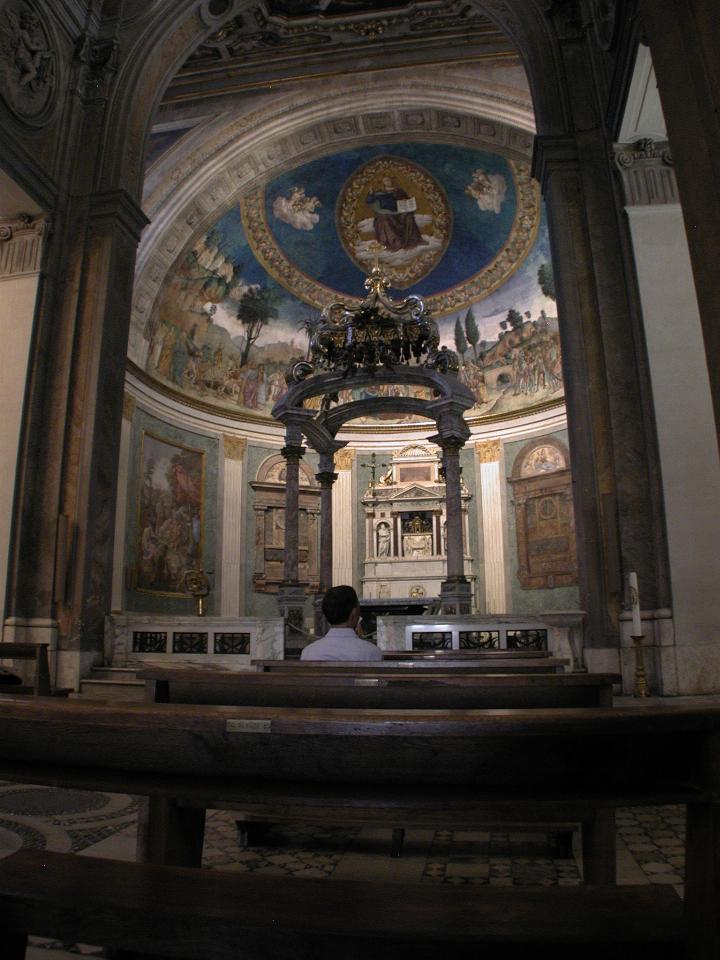
The main altar. The canopy is from the 18th century.
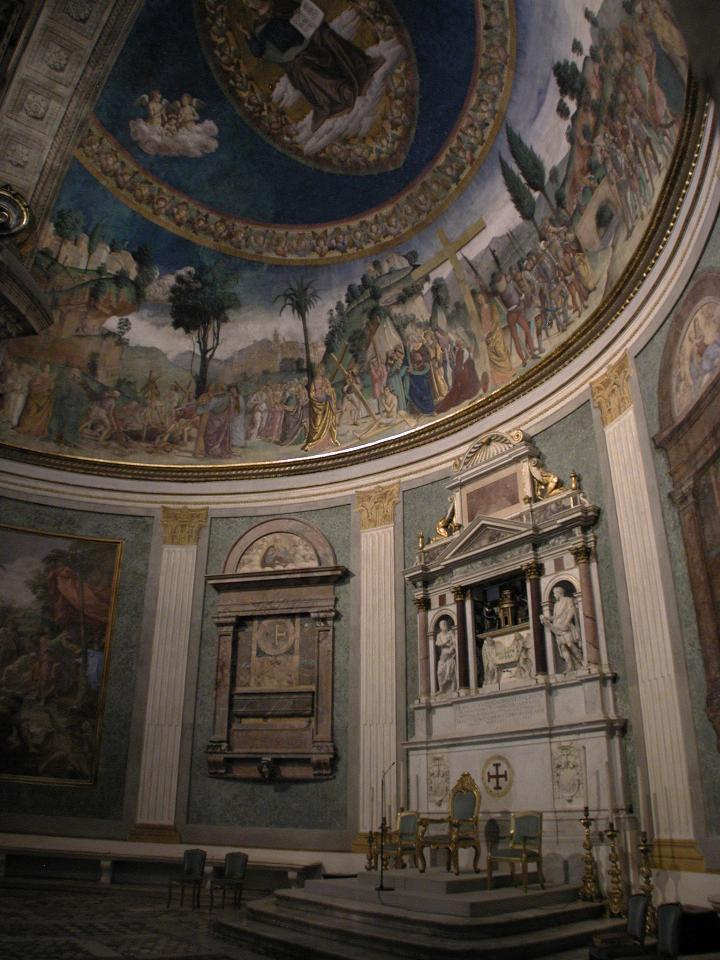
The apse, which unusually has a tomb in the wall - that of Cardinal Quinones who died in 1536. Apart from being an unusual place for a tomb, it also incorporaets a tabernacle!
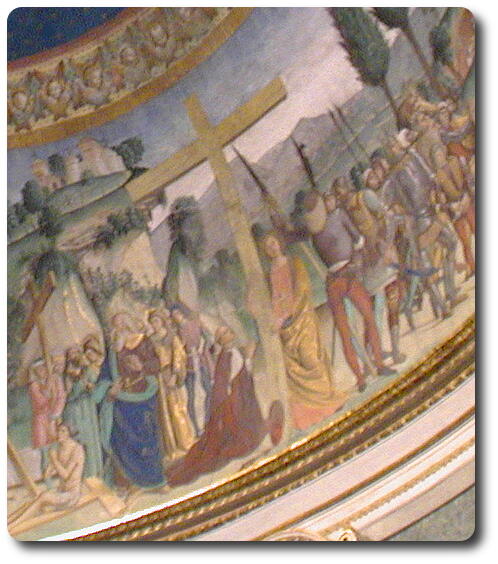
Part of the apse, showing the 15th century fresco of the history of the recovery of the cross, including this detail. The centre image is Christ Blessing and is dated at 1492 (the year that Italian Christopher Columbus bumped into North America).
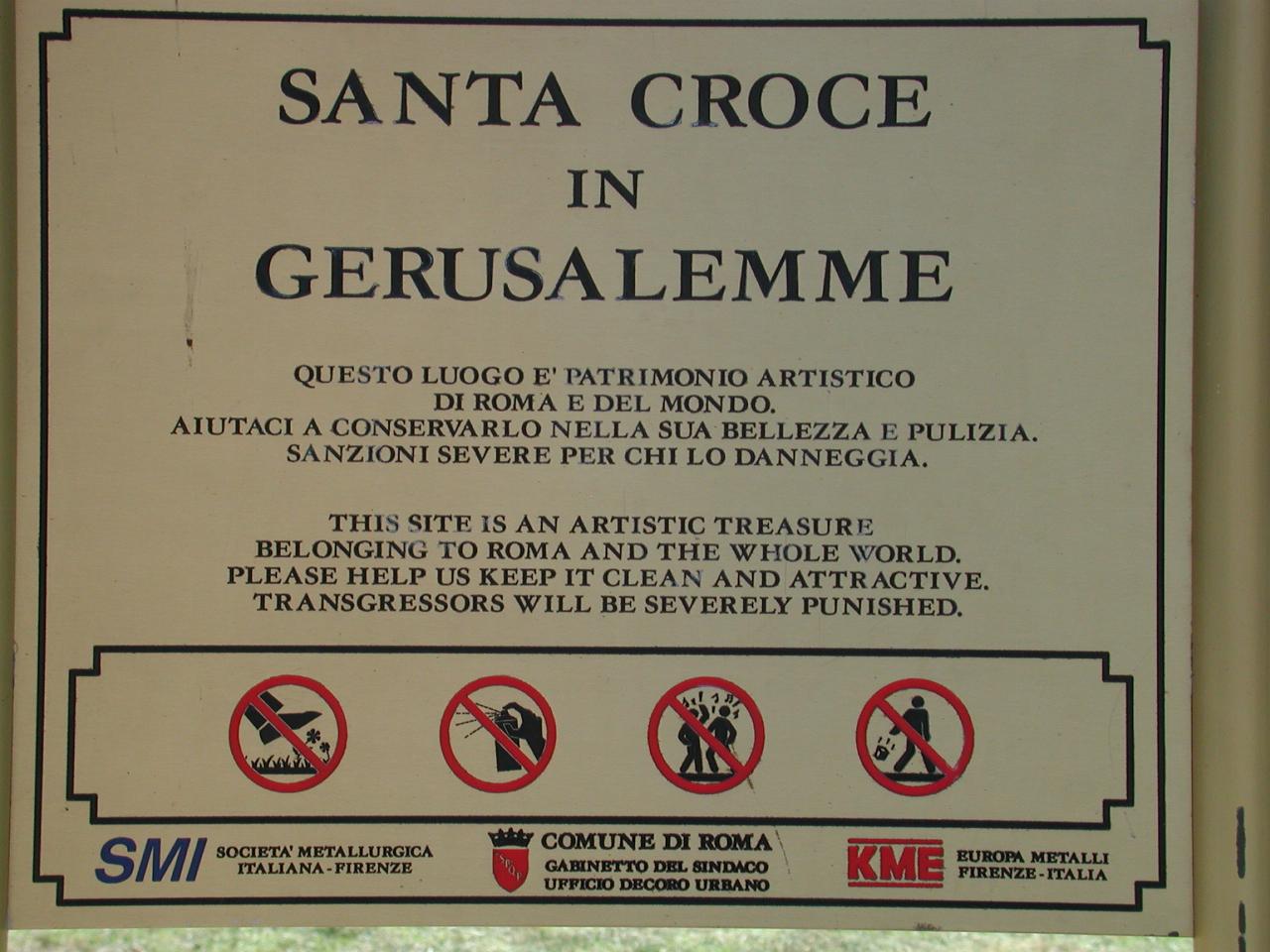
A sign out the front of the church - pity these things need to be spelled out, in all parts of the world.
 Italy In July