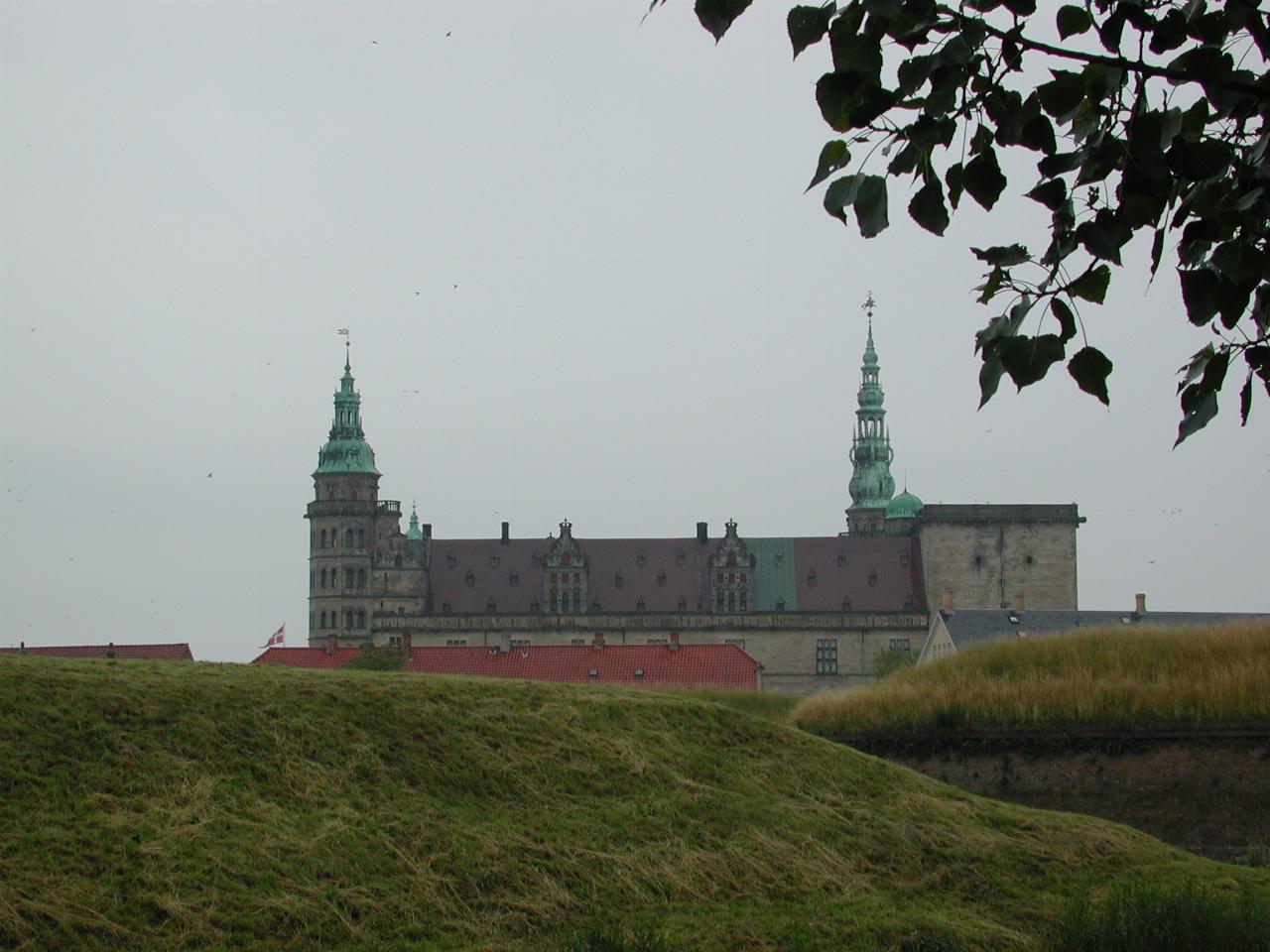
July 9th was a wet day. Inge and the bus - a small one, this time - were waiting for us at the scheduled departure time. This morning's travels started with a journey to Helsingør, which is north of Copenhagen, and the location where Denmark and Sweden are closest. Even so, the new bridge joining the two nations is actually at Copenhagen because that's where the majority of traffic is.
So off we set heading north, through the countryside of Sjælland the island on which Copenhagen is located. As Denmark's highest point is only 200m above sea level, I was not expecting any towering mountain peaks. And I was not disappointed. However, it was nice to see green fields.
The main attraction of Helsingør is the castle. It is the setting for Shakespeare's Hamlet although it seems likely that Shakespeare never saw it, and the play is set 600 years before the castle was built. Hamlet is based on Danish mythology's Amleth.
The tour bus, being conveniently small, dropped us off right at the entrance, and was just as handy when we returned. Given the steady rain, that was nice!
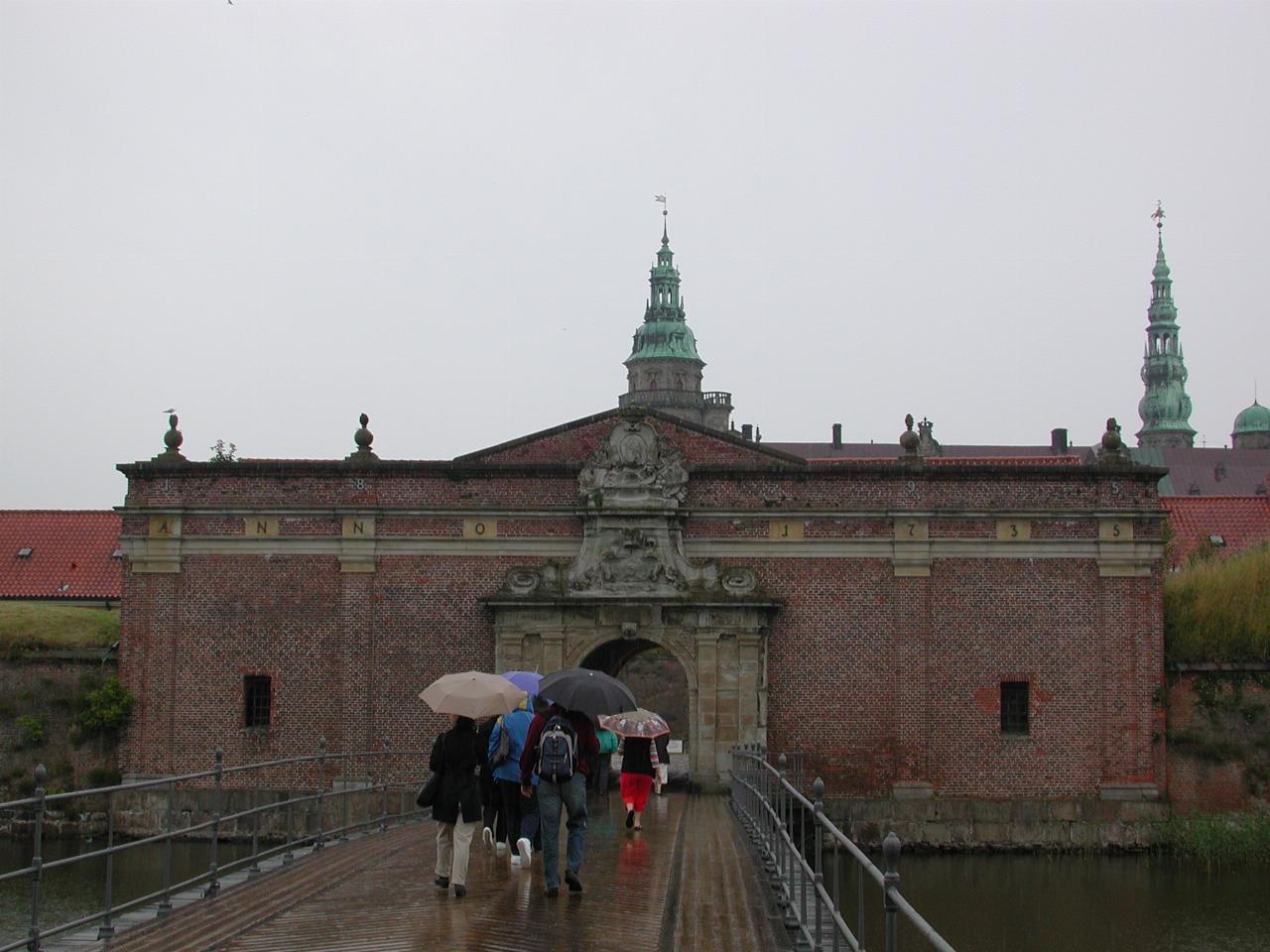
Our tour group crossing over the outer moat. The gate has the year 1735 inscribed in stone.
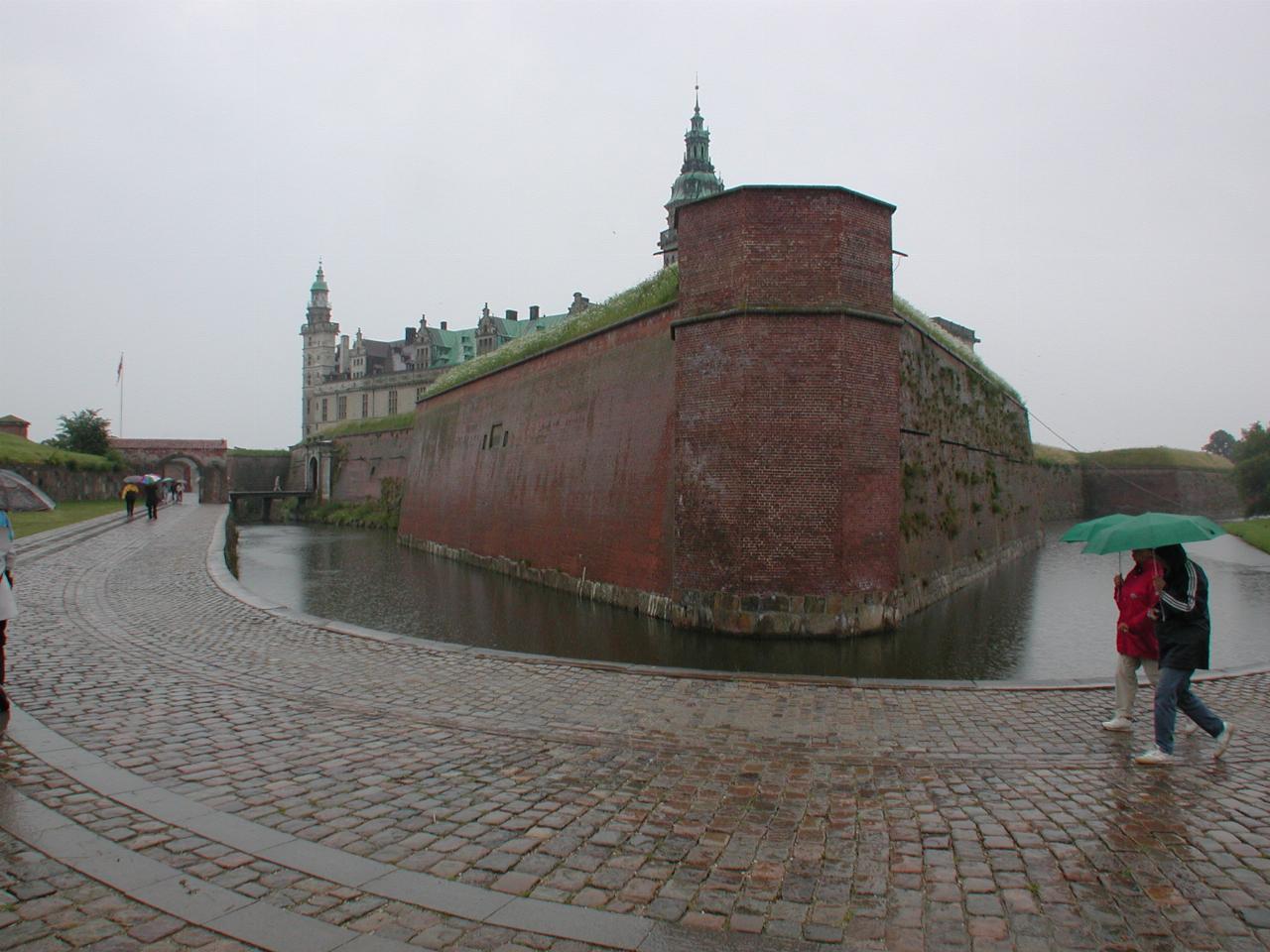
The inner moat - why have just one when there's room for two!
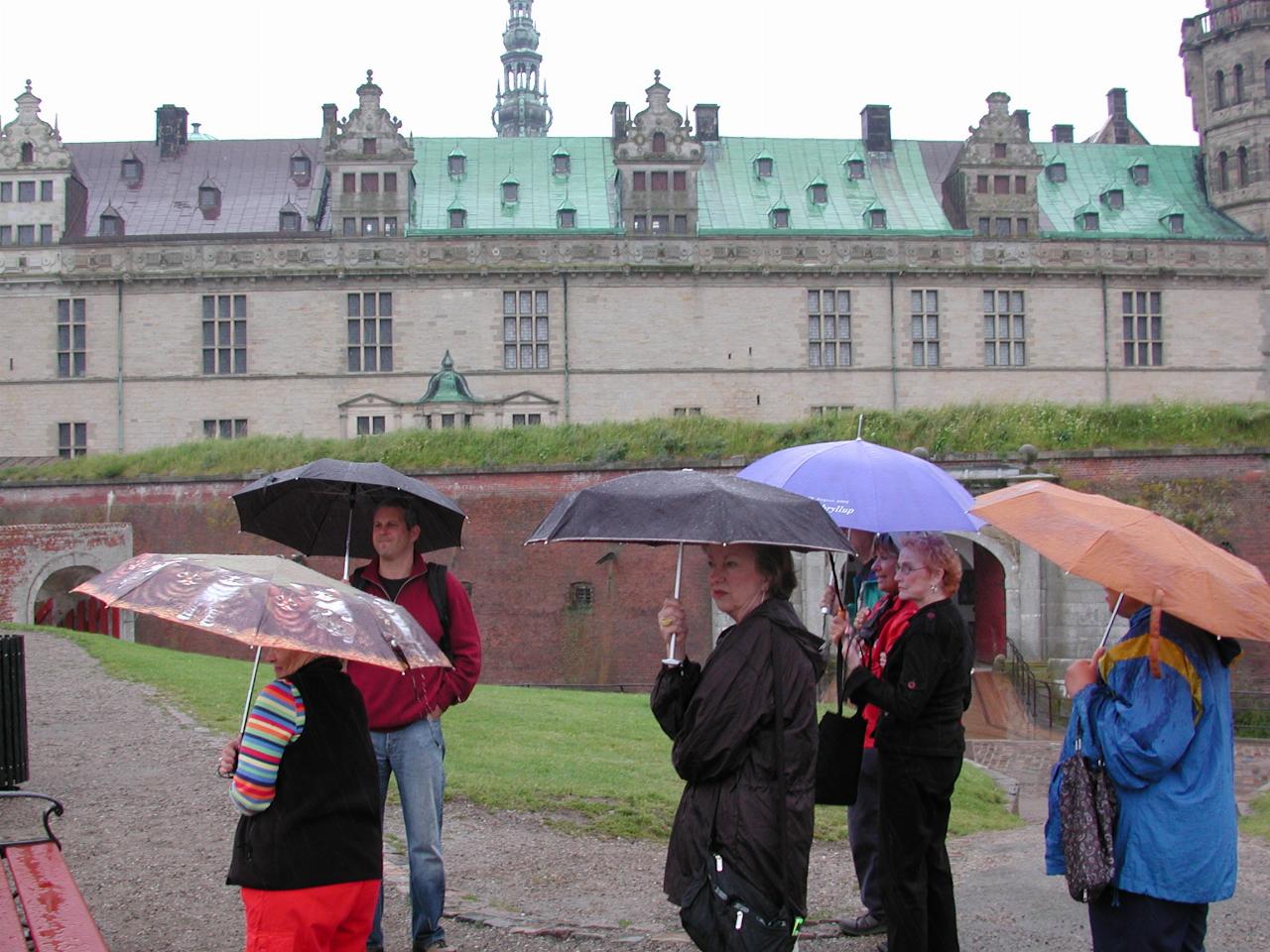
Before crossing the inner moat to the castle proper, we admire the view. From under umbrellas!
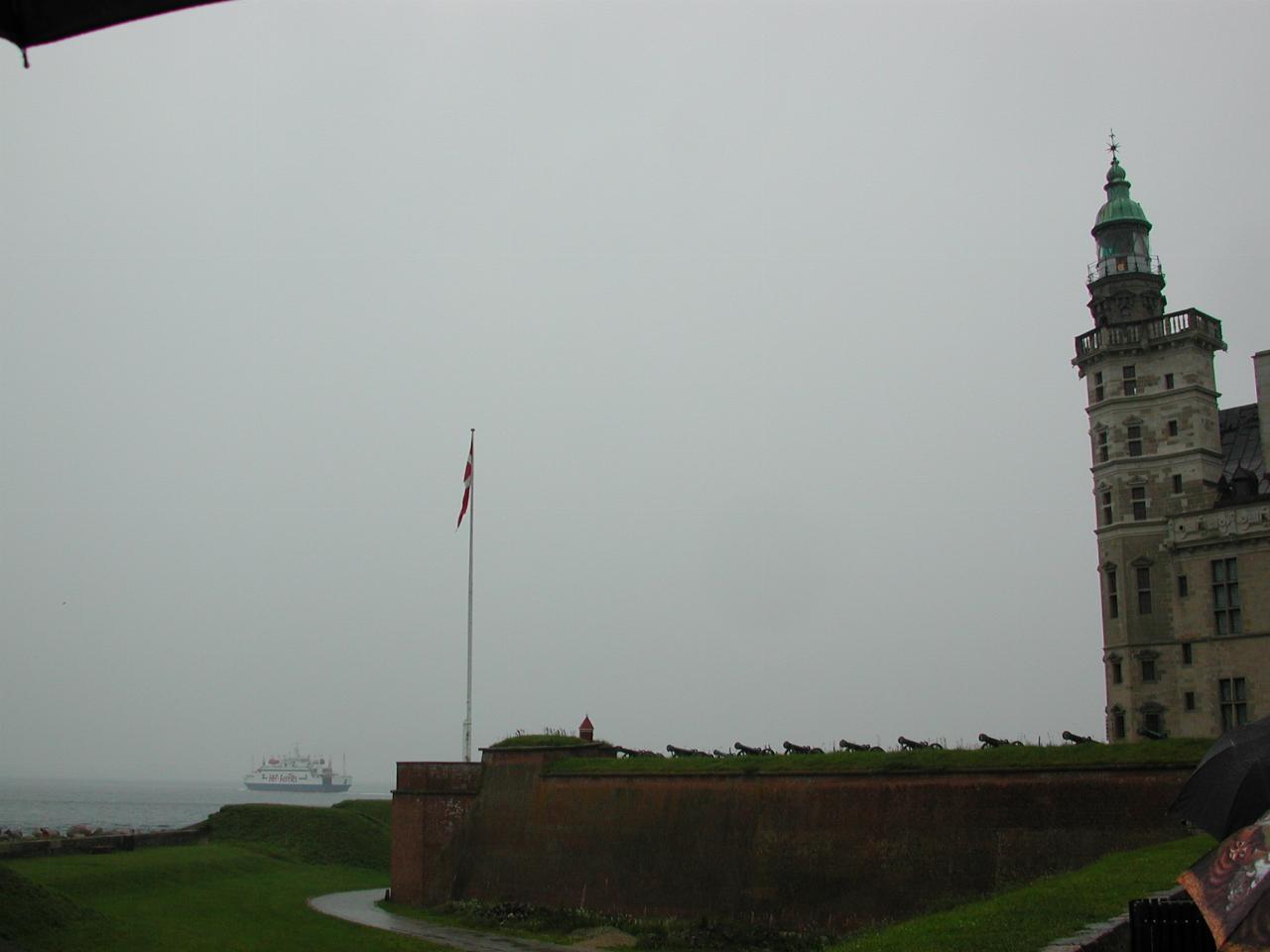
The castle is adjacent to Øresund, the passage separating Denmark and Norway. The town of Helsingør dates to the 13th century. In the 1400s, Erik of Pomerania started collecting the Sound Tariff on passing ships. The town of Helsingør prospered as a result! The castle was built in the 16th century as a Renaissance toll-both, to enforce the tariff on passing ships. The ship in this photo is heading across the sound to Sweden, which was almost visible through the rain. Note also that the tower on the corner of the castle is a lighthouse!
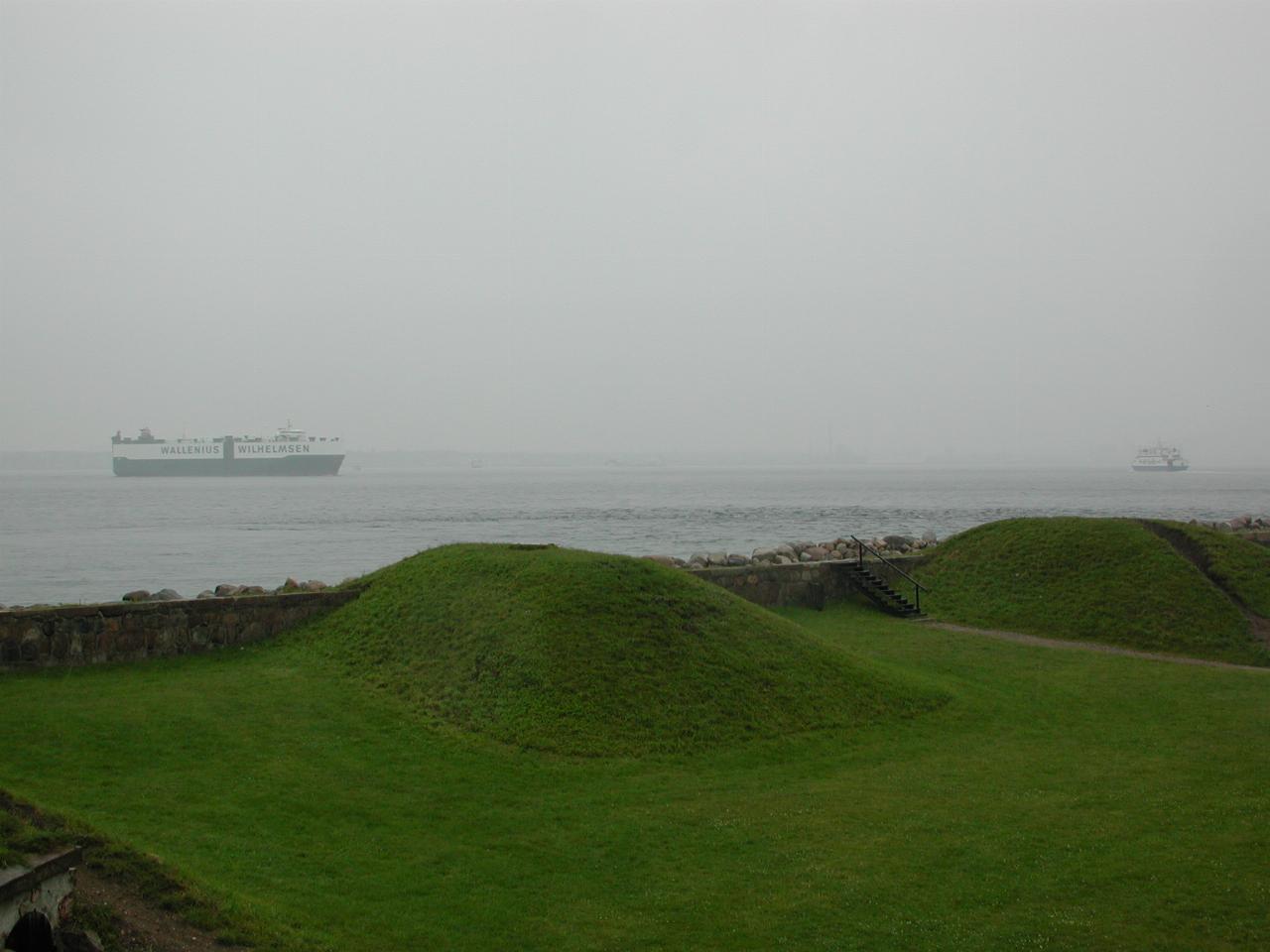
Castle ramparts, and a passing ship as the ferry disappears into the rain.
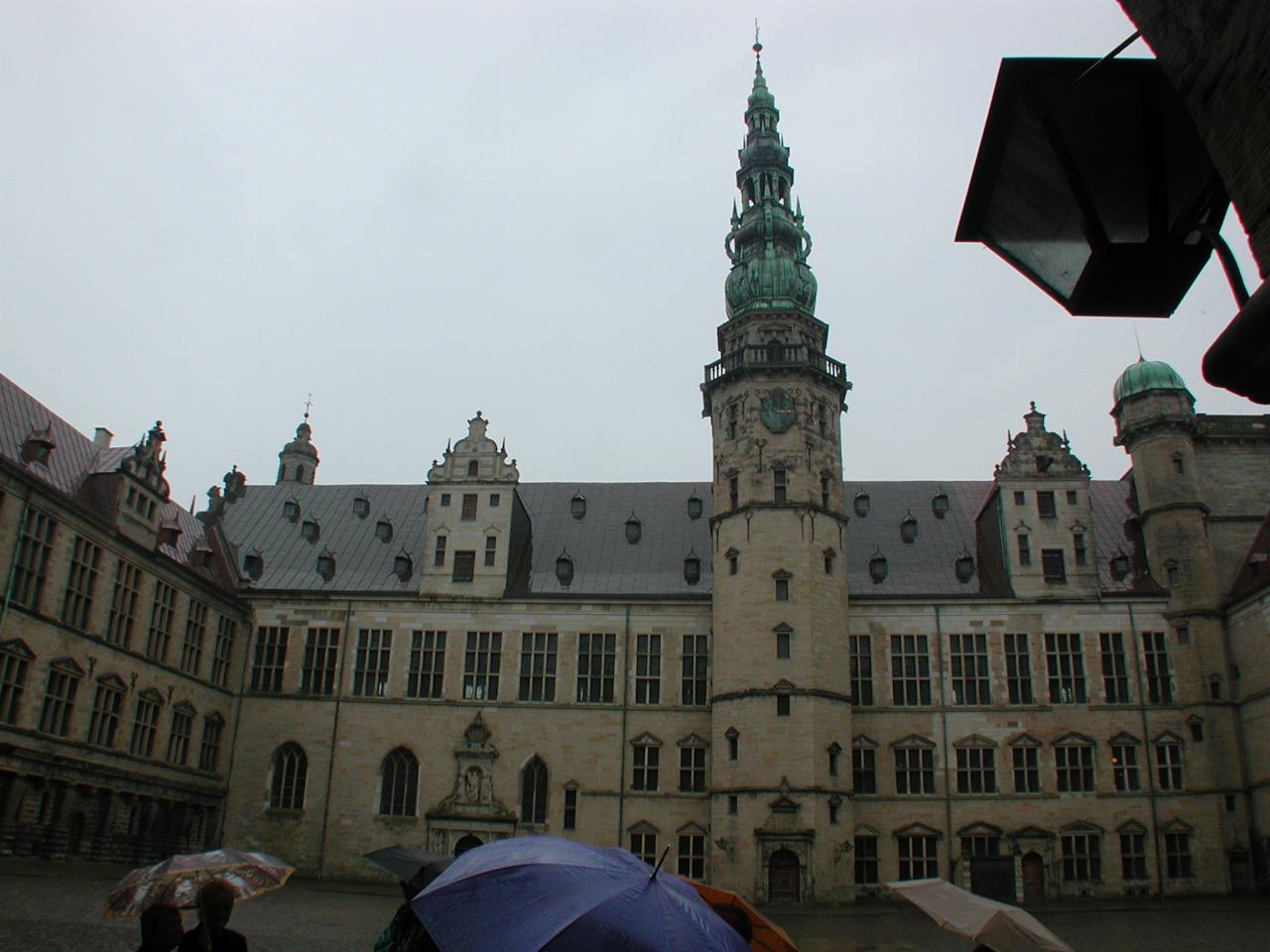
The Trumpeters Tower is an octagonal tower, somewhat more decorated than the rest of the building. The entrance to the Royal Chapel is on the left hand side, just above the blue umbrella.
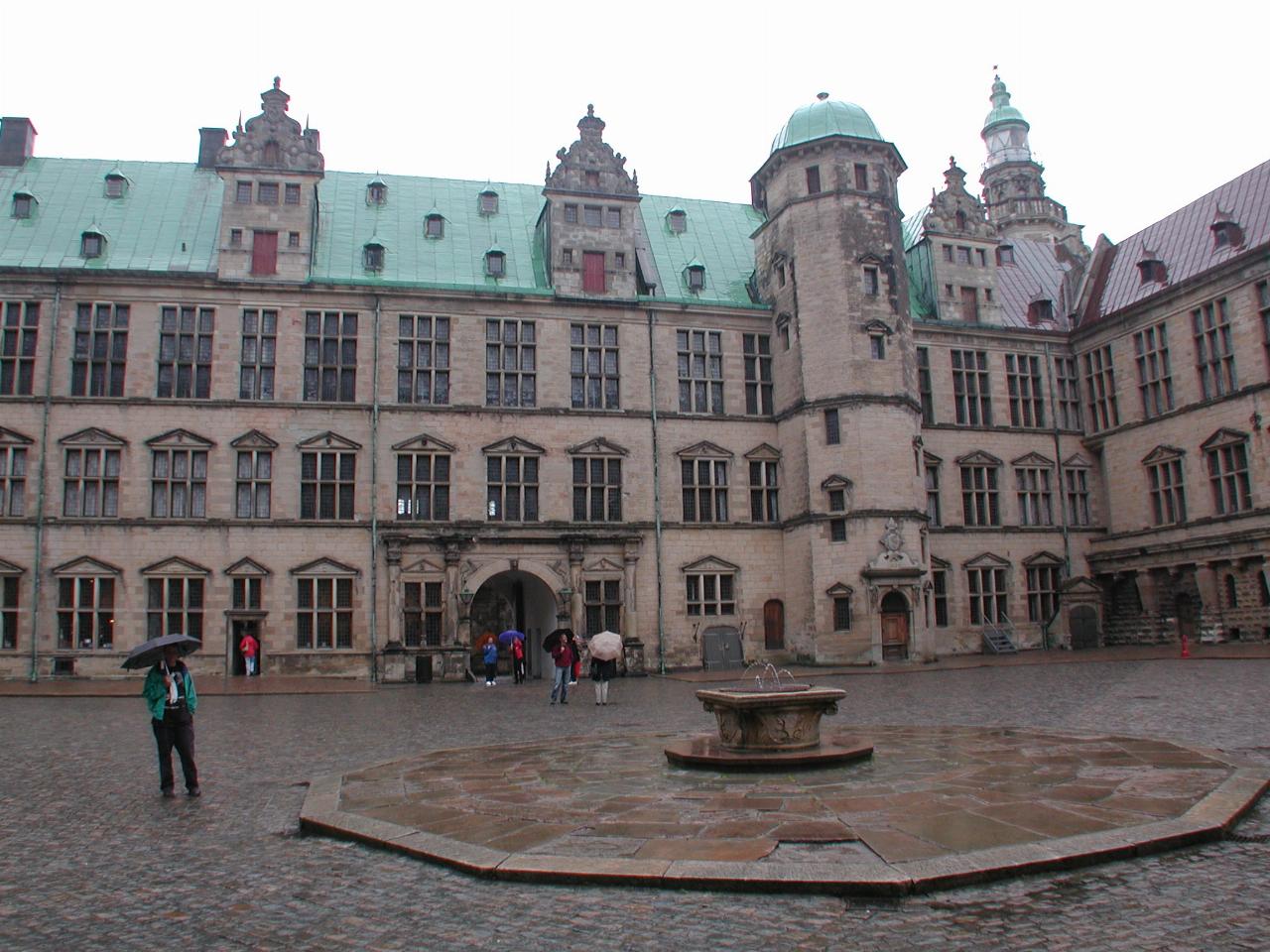
The courtyard as seen from the base of the Trumpeters Tower. Note the lighthouse in the tower on the right.
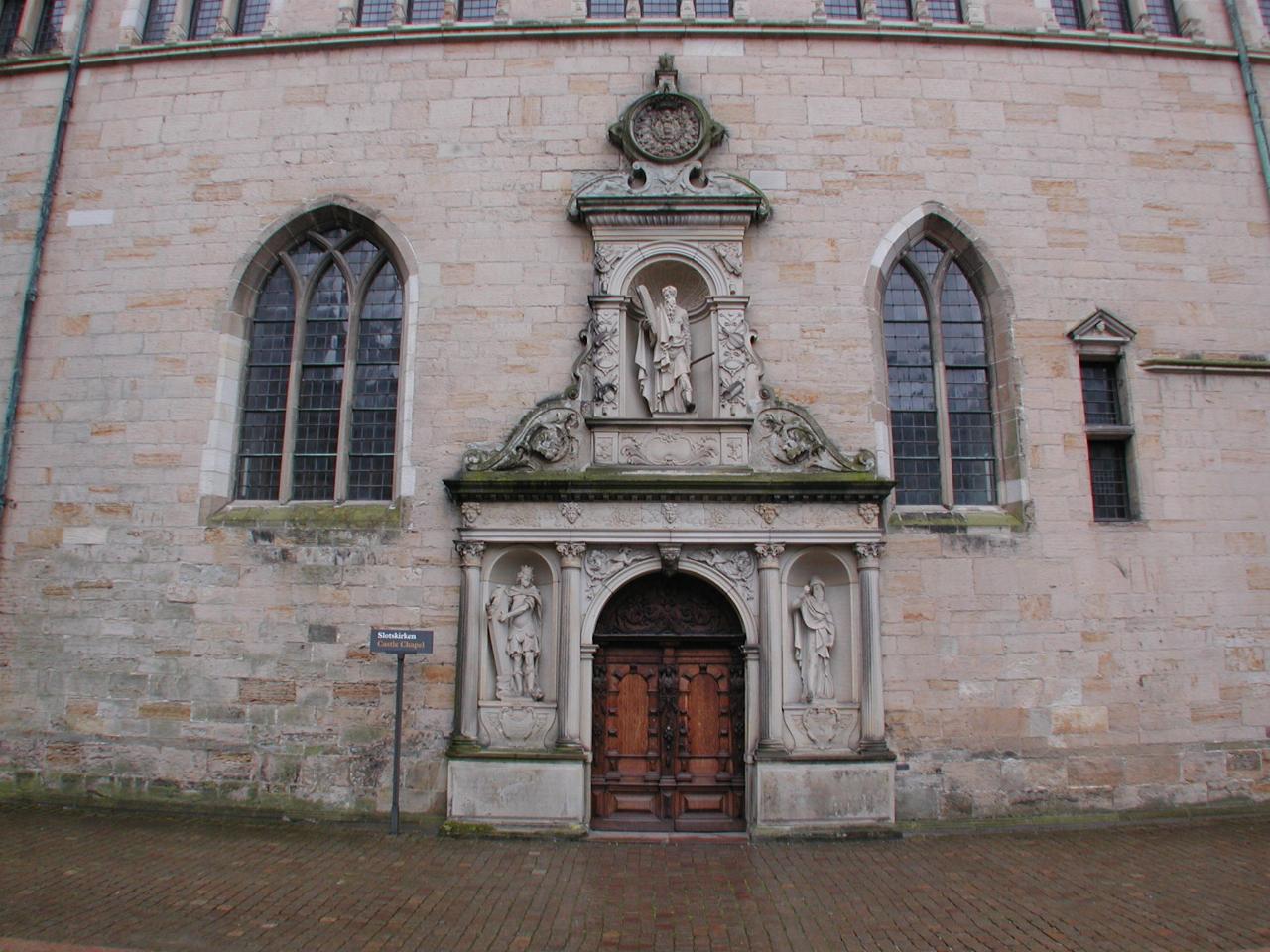
The entrance to the Royal Chapel, the interior of which is still in its original Renaissance style from 1582.
 Tour Main Page
 Humlebæk (Louisiana Museum) And Back To Copenhagen